Payment Operations Console
SaaS B2B payment operations tool designed to manage failed transactions, prioritize issues, and support fast decision-making workflows.
Role
Product Designer
Year
2026
Overview
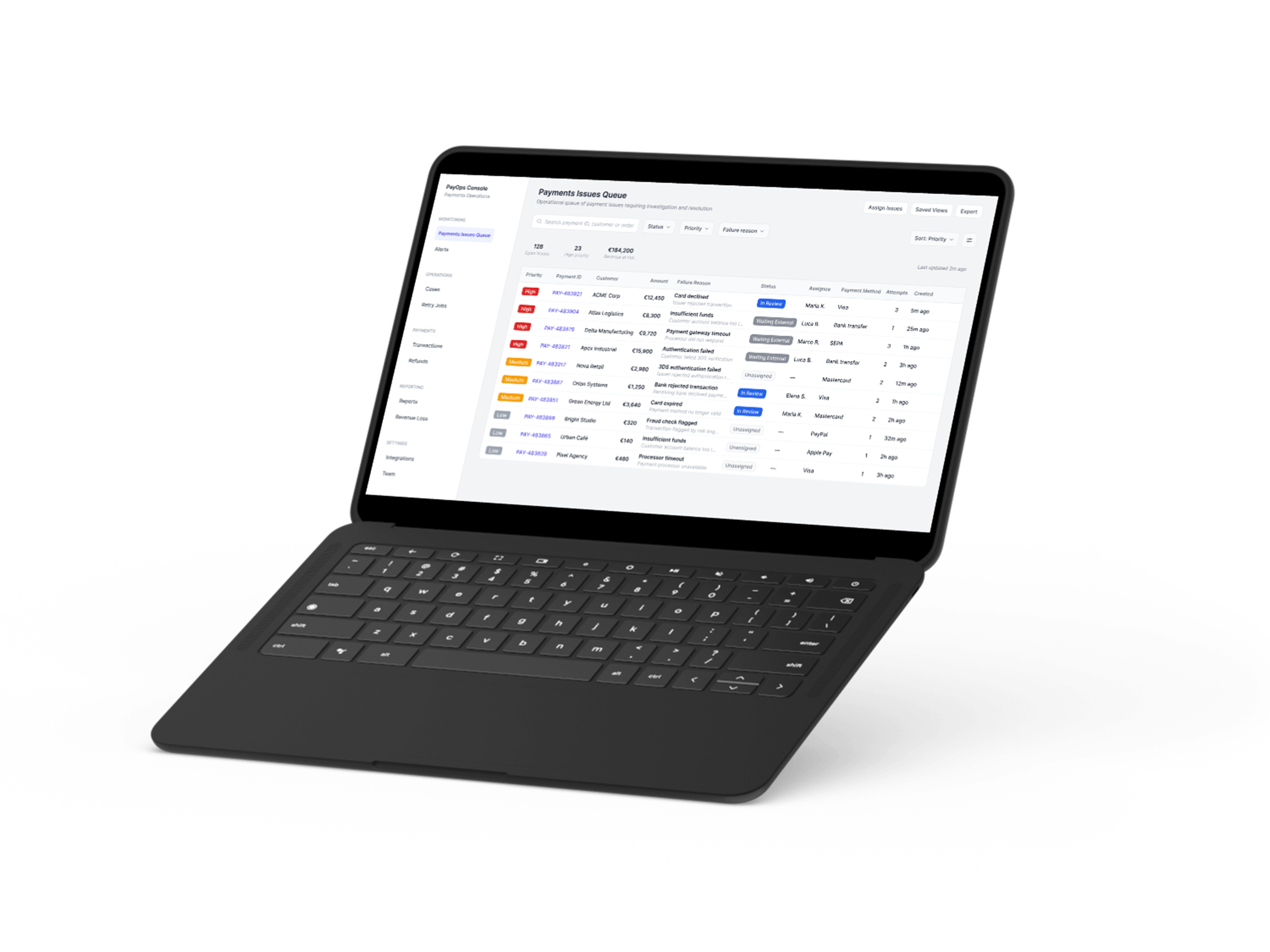
Payment Operations Console is a SaaS tool designed for payments operations teams to manage problematic transactions. It helps users move from identifying issues to taking action and tracking results in a structured way.
Problem
When payments fail, teams need to: understand what happened, decide what to do, take action quickly, track the outcome. In many tools, this process is fragmented. Data is available, but: there is no clear prioritization, actions are not guided, next steps are unclear. This leads to slower resolution and potential revenue loss.
Product Approach
Instead of designing a dashboard, I designed an operational decision system. The product supports a clear workflow: Detect, Investigate, Decide, Resolve, Track. The goal is to reduce uncertainty and guide users toward the next action.
Core Structure
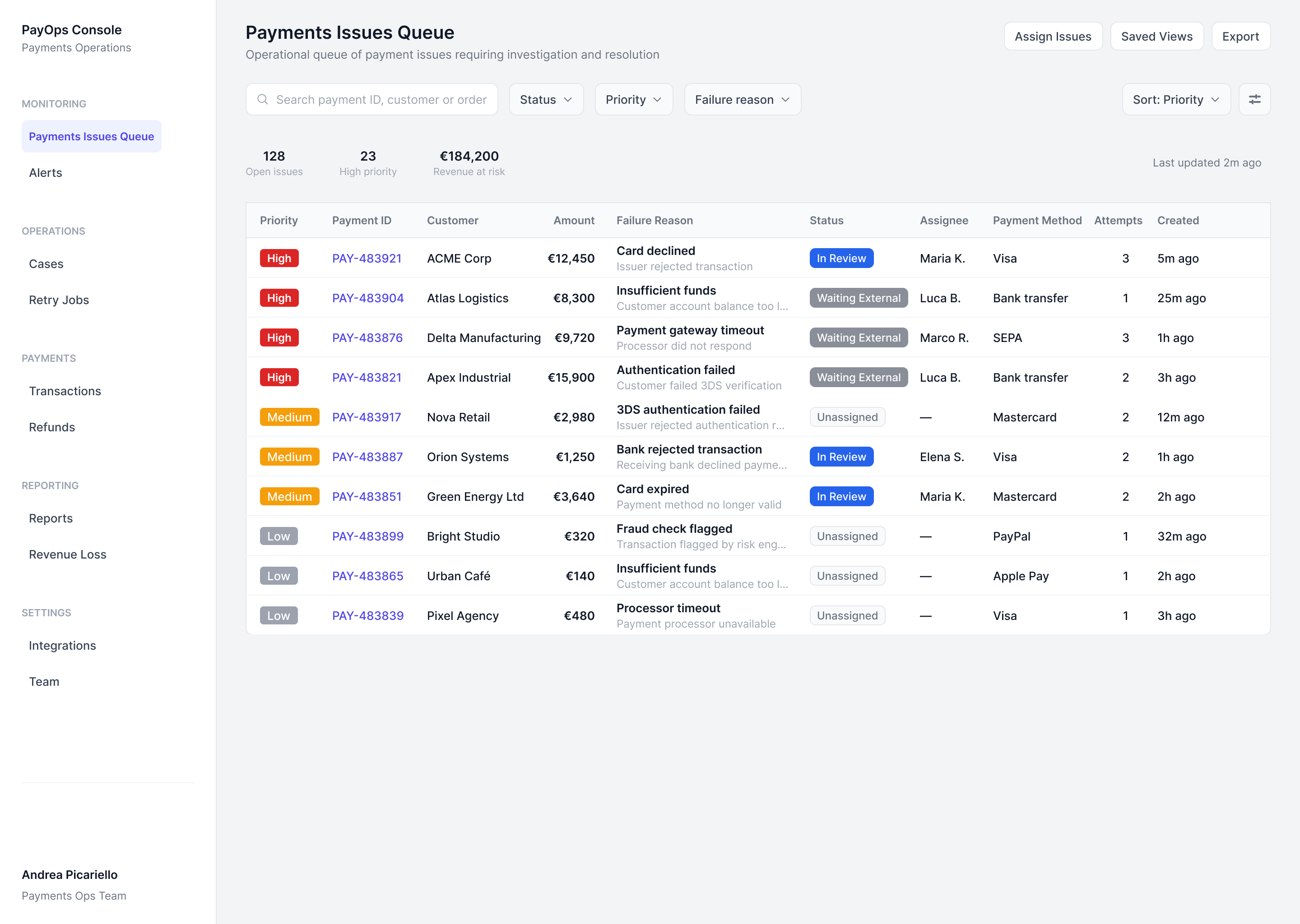
Issues Queue
Prioritization first. Users can quickly identify high-impact issues and filter by urgency.
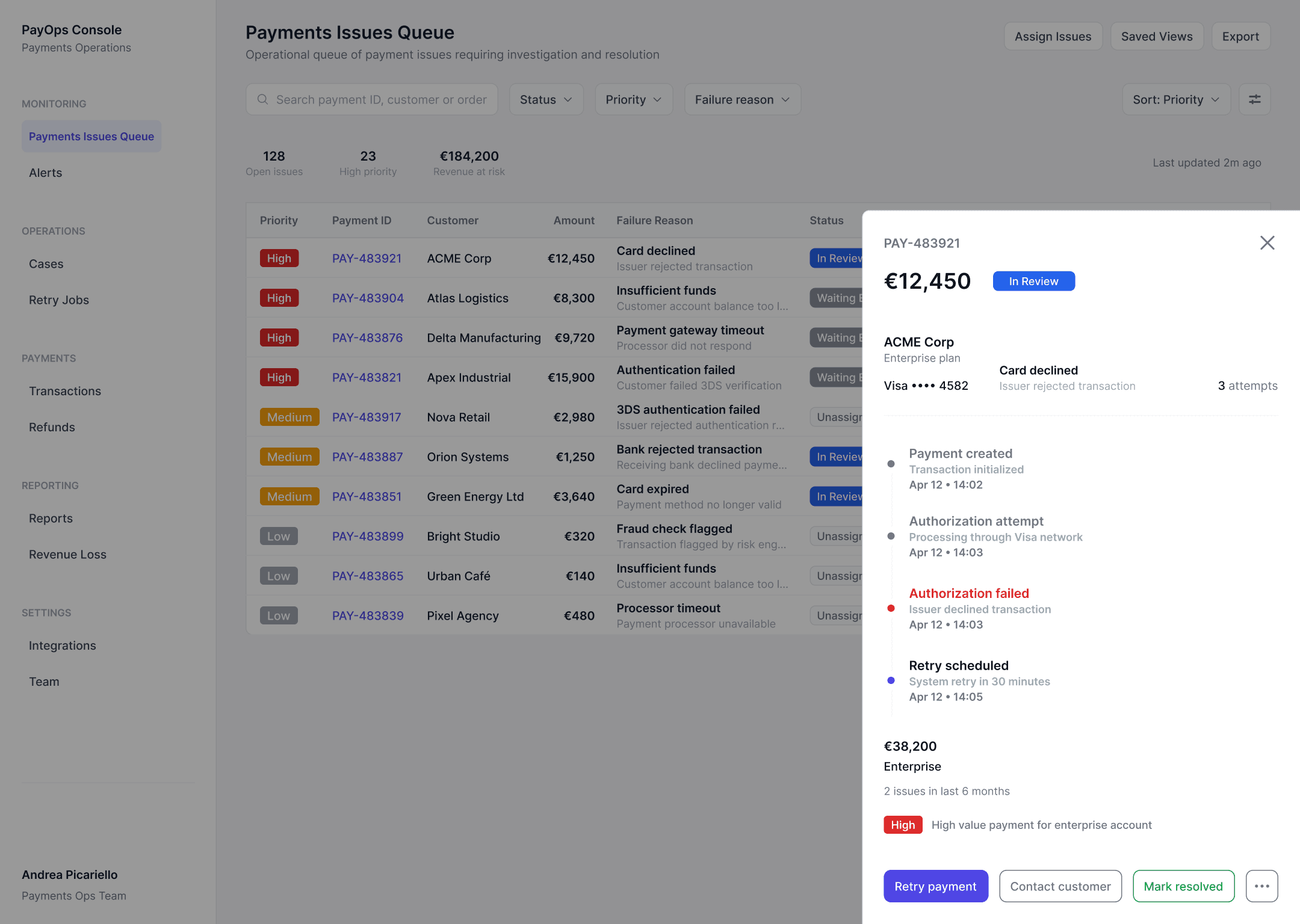
Investigation Panel
Fast decisions without context switching. Relevant transaction data is surfaced in a single panel.
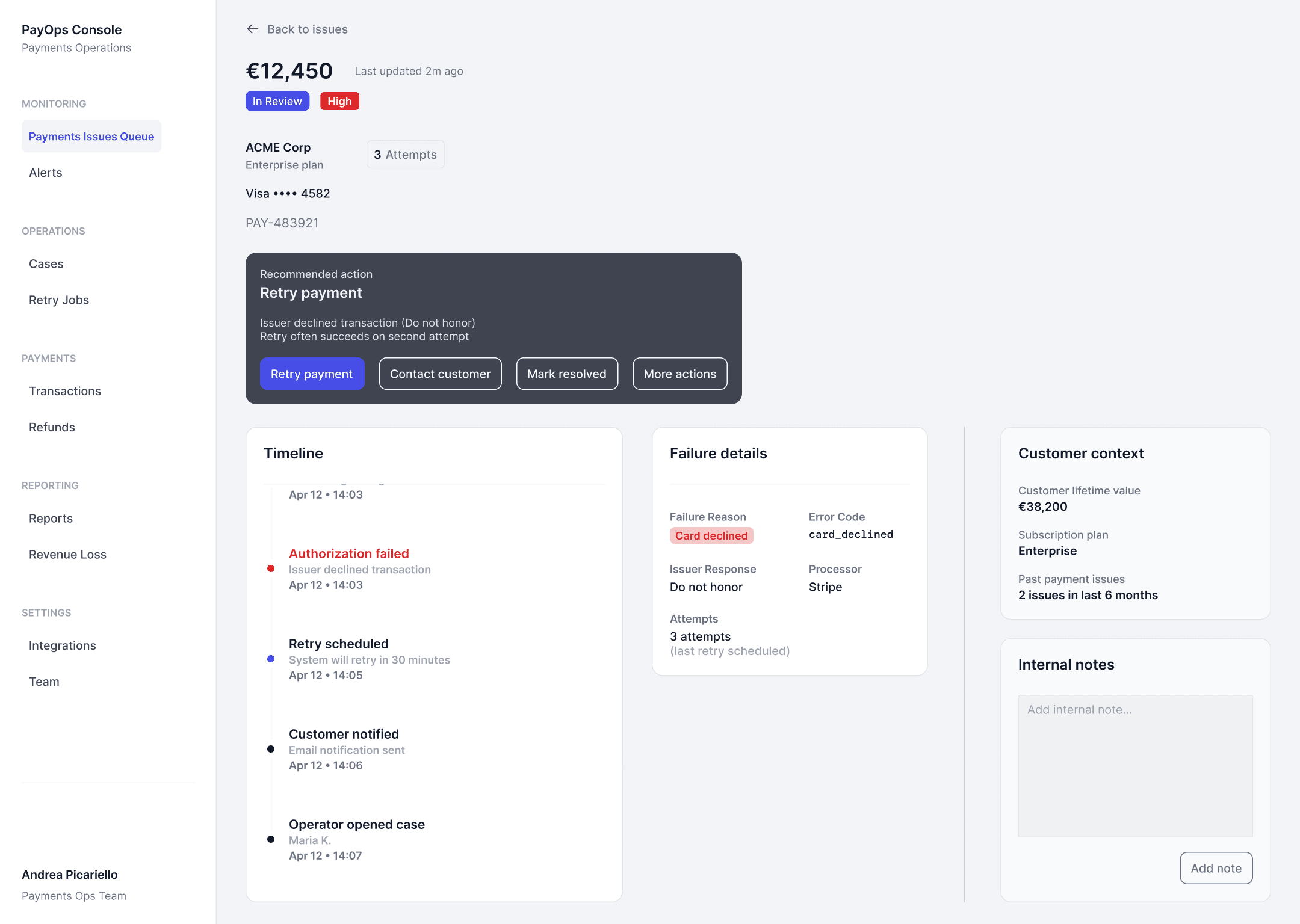
Case Detail
Structured decision-making for complex cases that require deeper analysis.
Key Design Decisions
From data to decisions
The system guides actions instead of only showing information.
Action Panel as core element
Decisions are centralized and supported with context.
Prioritization in the queue
Users can quickly identify high-impact issues.
Dual navigation model
Panel for speed, detail page for depth.
Simplified action system
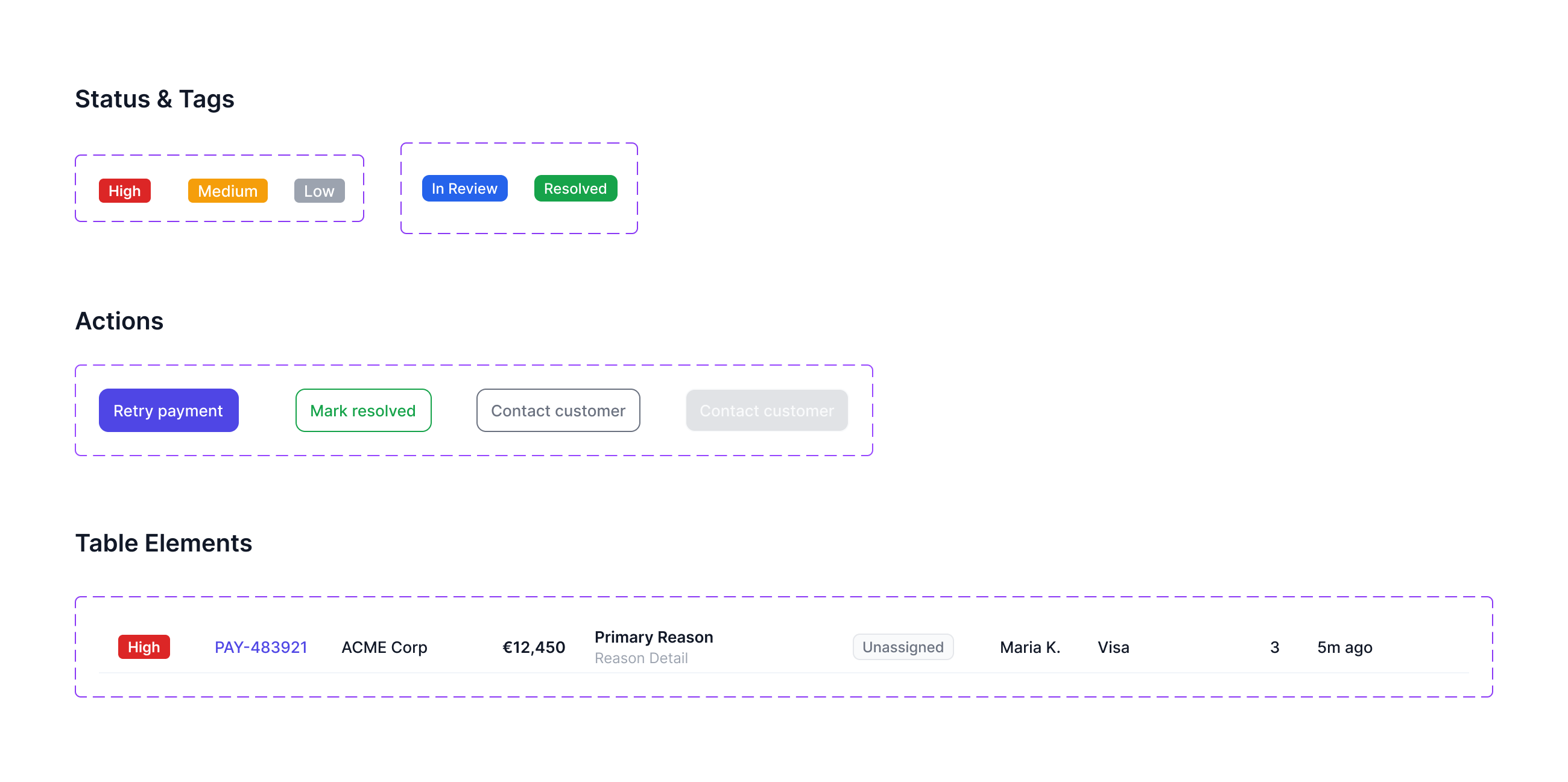
Primary actions are visible, secondary actions are grouped.
Outcome
The result is a system that moves teams from raw failed-transaction data to a clear next action: priorities surfaced by impact, each decision guided, and outcomes made traceable — structured as an operational decision system, not a dashboard.
How I'd measure success
If this shipped, I'd validate it against time-to-resolution per failed transaction, the share of high-priority issues actioned from the queue, decision rework rate, and recovered revenue. I'd start with a usability test on the Detect → Resolve path, to check whether the prioritisation actually changes what teams handle first.
Learnings
Operational tools require a different approach compared to dashboards. The main challenge is not showing more data, but helping users understand what to do next. Clear actions and state transitions are essential to support real workflows.