E-commerce Purchase Flow
Designing a mobile purchase experience focused on clarity, speed and reducing friction during checkout.
Role
Product Designer
Year
2026
Overview
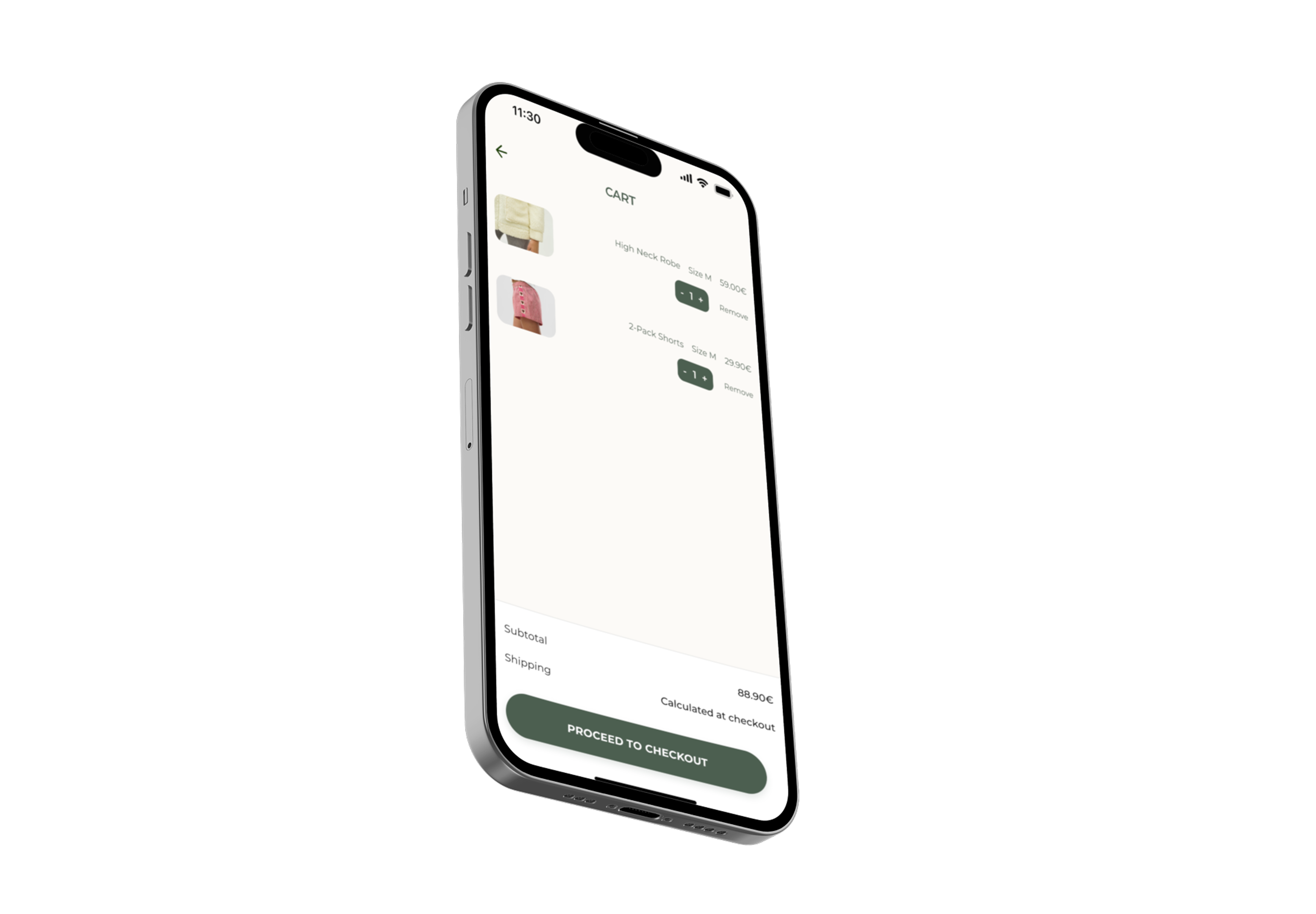
This project explores the design of a mobile e-commerce purchase flow, from product discovery to order confirmation.
Problem
Mobile checkout is where intent turns into drop-off: too many steps, unclear actions, and information scattered across screens make people hesitate or abandon the purchase.
Product Approach
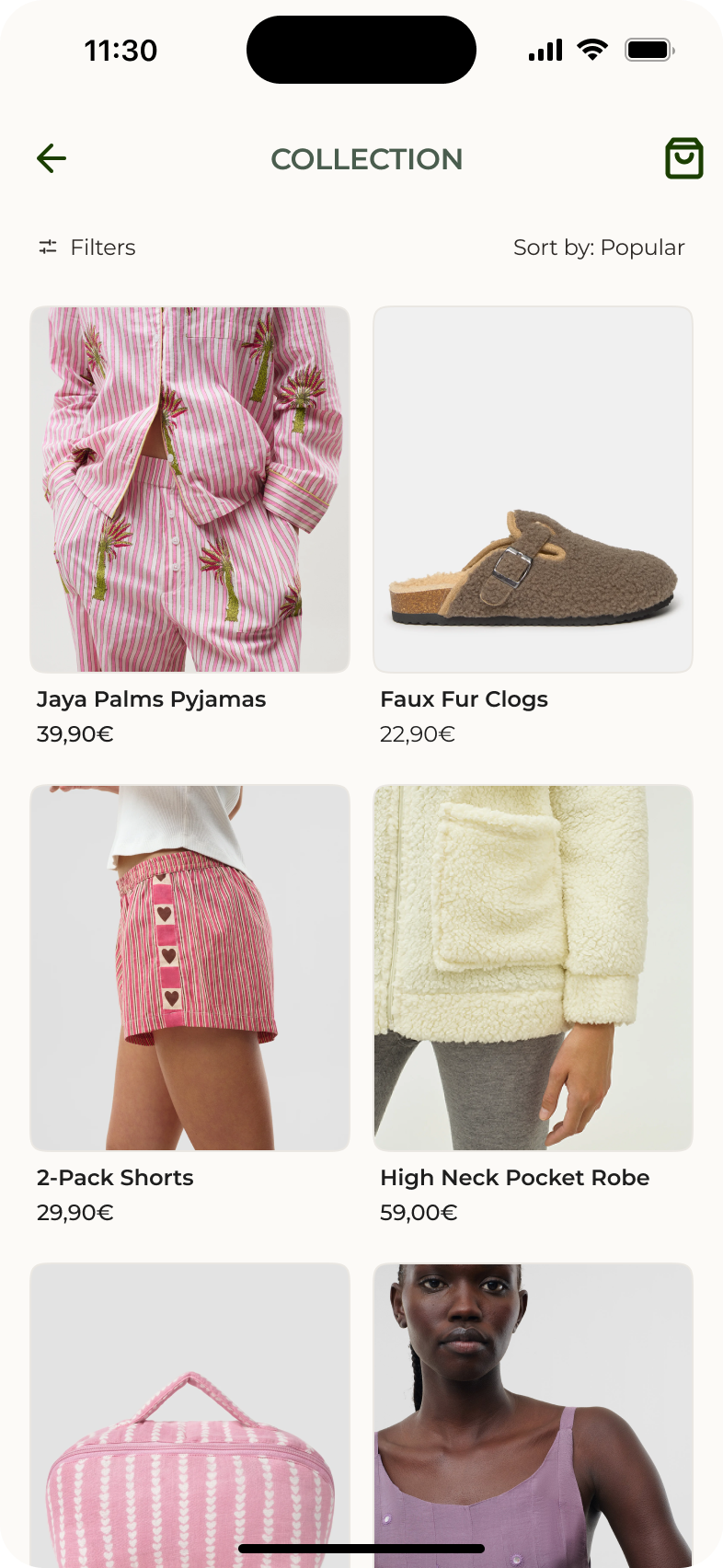
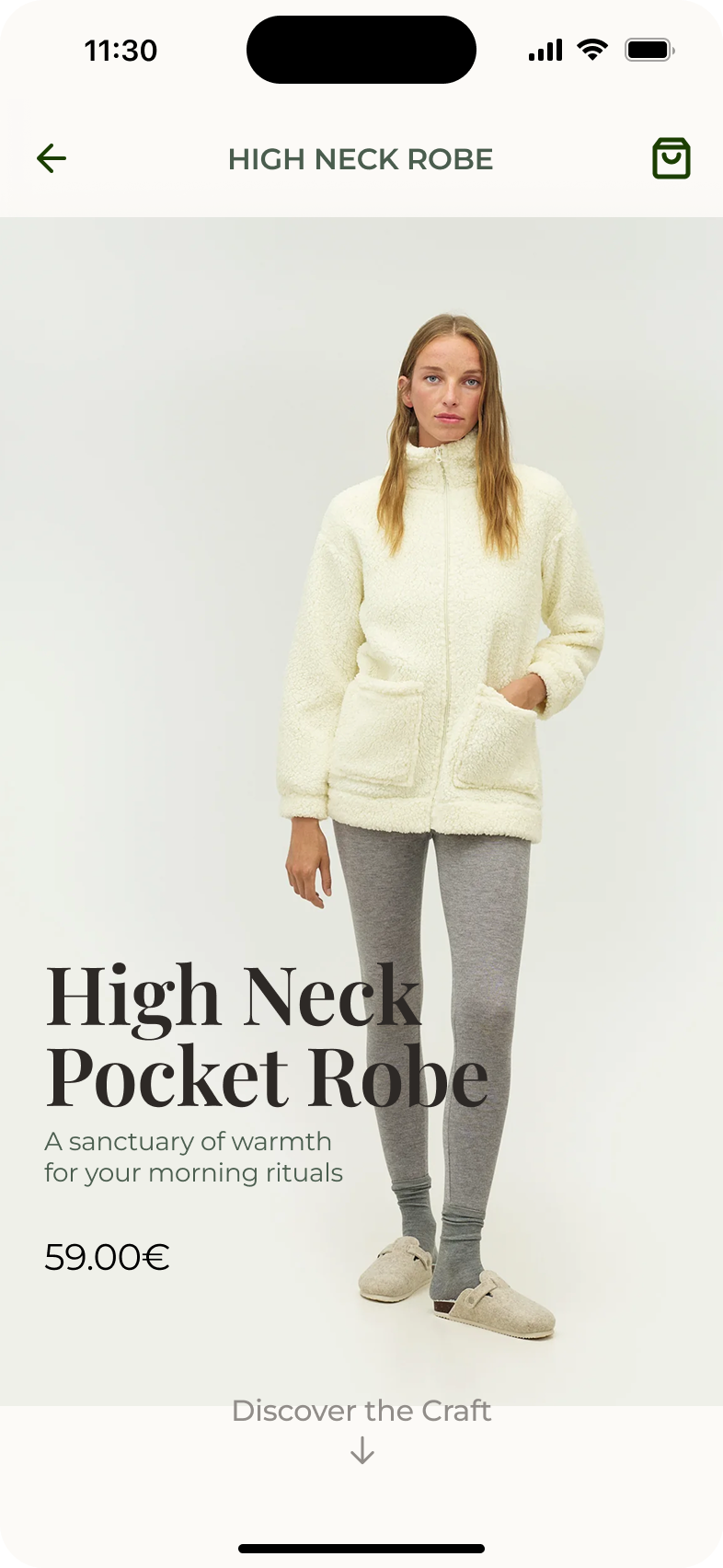
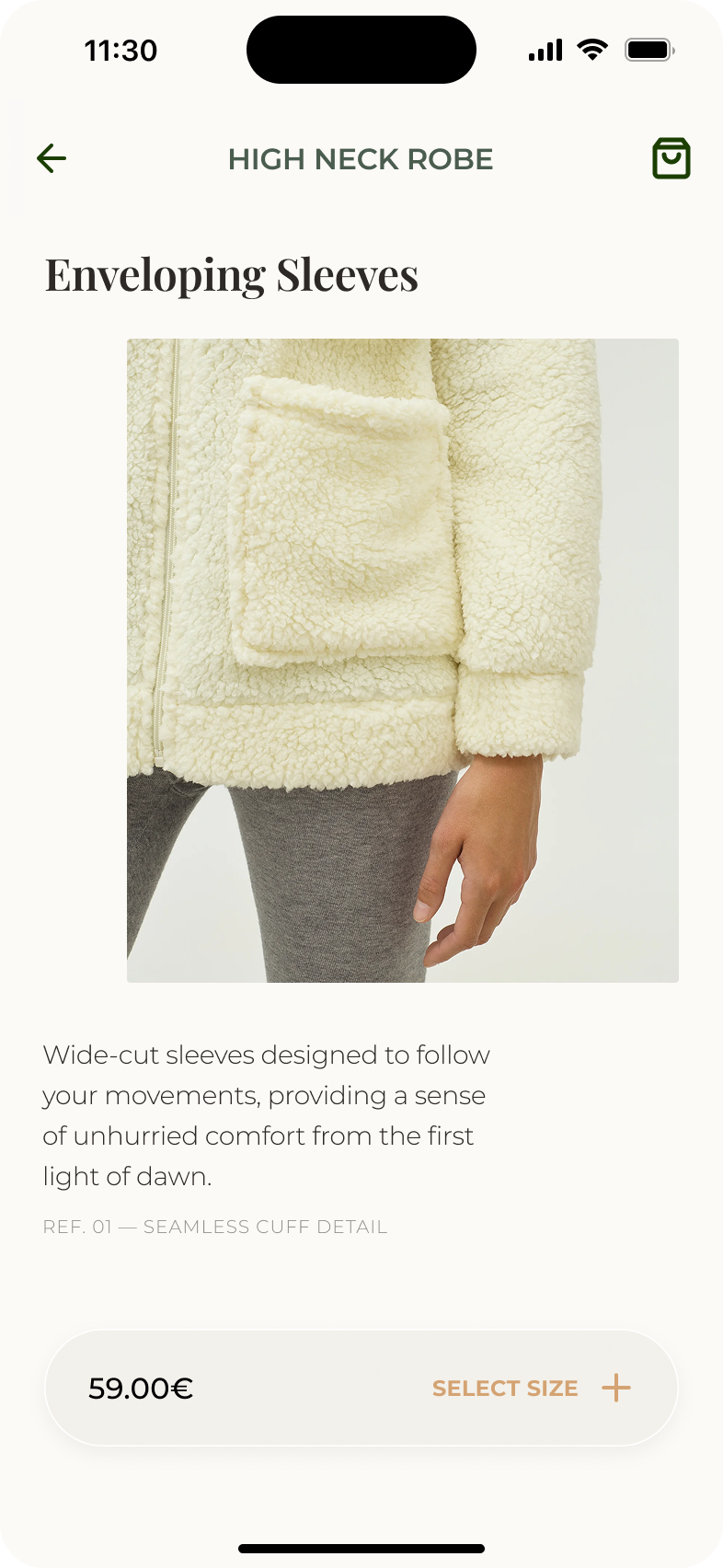
The product was approached as a linear purchase flow, where each step supports a specific decision: browsing, product detail, option selection, cart review, and checkout completion. The flow was designed as a straightforward sequence from product discovery to checkout, minimizing unnecessary steps.
Key Design Decisions
Single-step checkout
Reduced the checkout to a single step to minimize friction and drop-off.
Action clarity
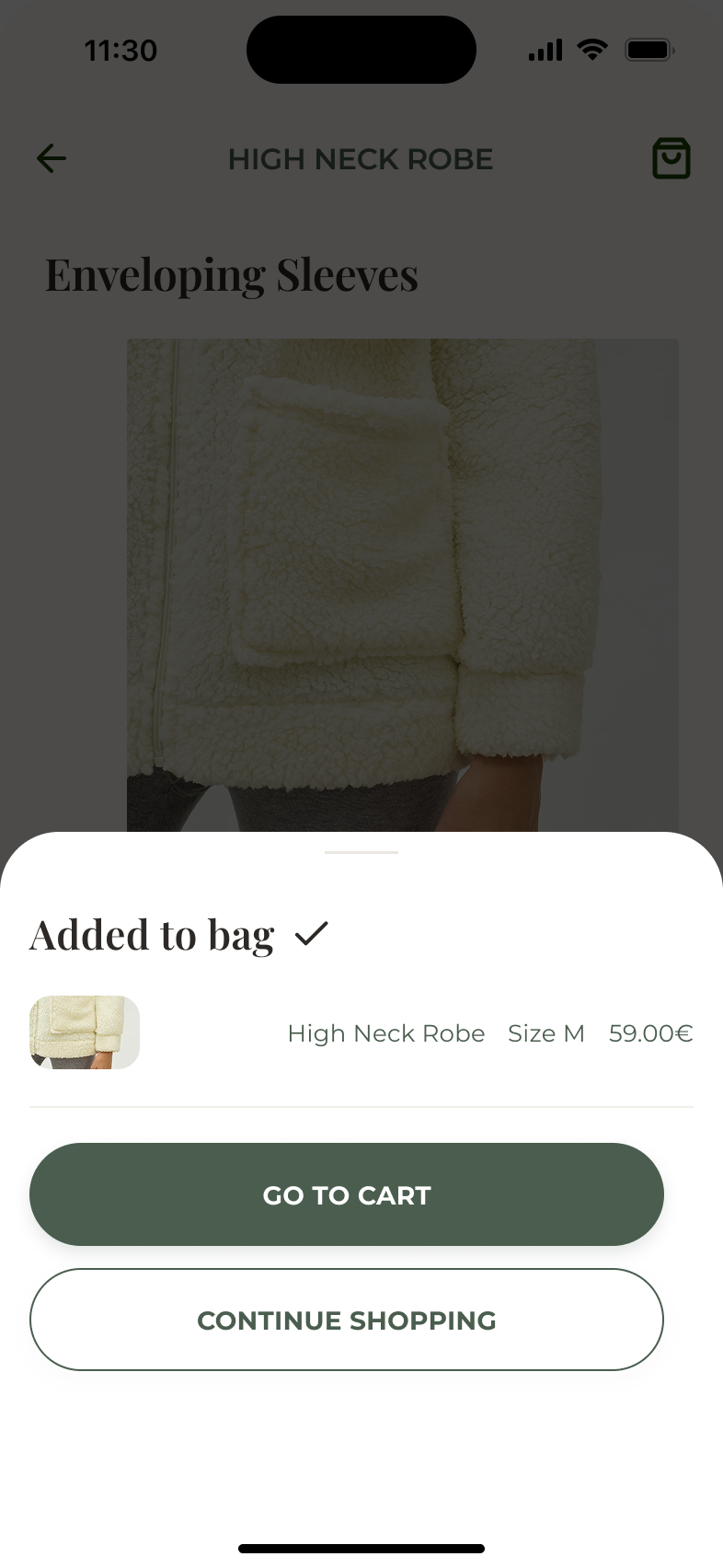
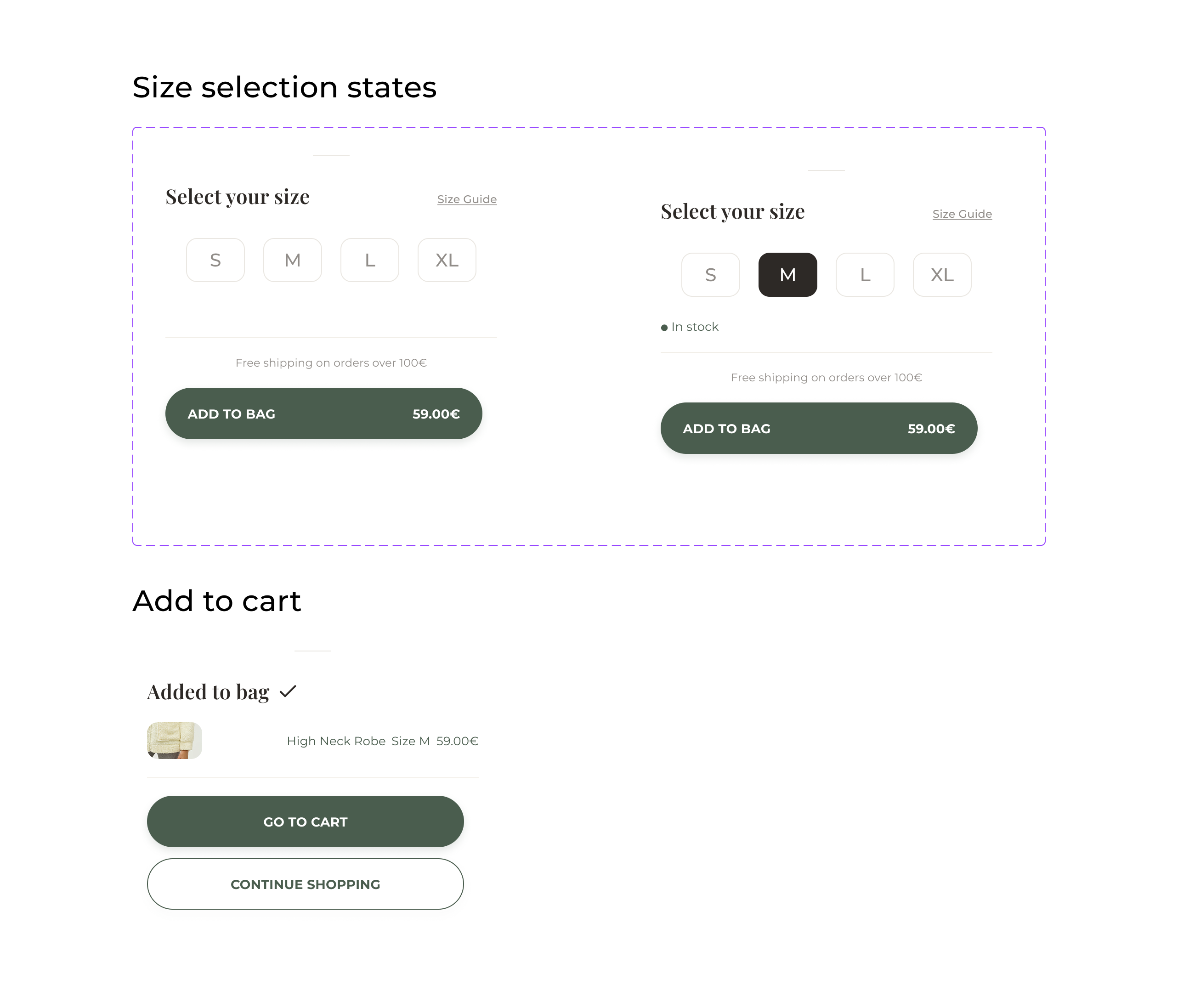
Prioritized primary actions (Add to cart, Checkout) for immediate visibility and clarity.
Structured product information
Product information is structured to support quick understanding before the purchase decision.
Outcome
The result is a coherent flow from discovery to a single-step checkout, leaning on familiar e-commerce patterns to keep cognitive load low and keep the user moving toward purchase.
How I'd measure success
I'd measure checkout completion rate, drop-off by step, and time-to-purchase, A/B testing the single-step checkout against a multi-step baseline to see whether fewer steps actually reduce abandonment.
Learnings
Cutting steps only helps if every remaining step is unambiguous — friction comes from unclear actions as much as from screen count.