E-commerce — Mobile Experience
Role: Product Designer
Type: Concept project
Year: 2026
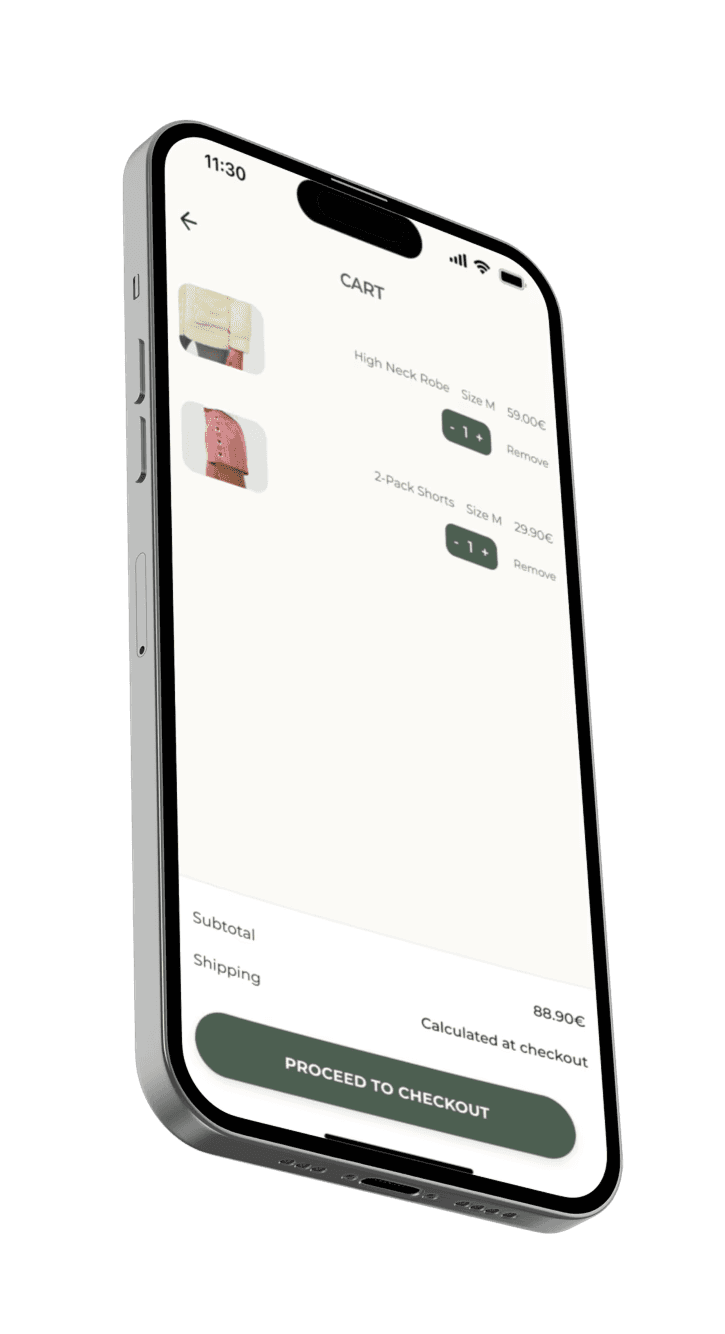
This project explores the design of a mobile e-commerce purchase flow, from product discovery to order confirmation.
The goal was to create a simple and clear experience that helps users browse products, understand key information and complete a purchase without friction.
The focus was on applying familiar patterns and structuring the flow in a way that supports quick decision-making.
Mobile e-commerce experiences often introduce unnecessary friction during the purchase process.
Users are required to navigate multiple steps, interpret dense product information and make decisions with limited clarity.
This can lead to hesitation, errors or drop-offs, especially during key moments like product selection or checkout.
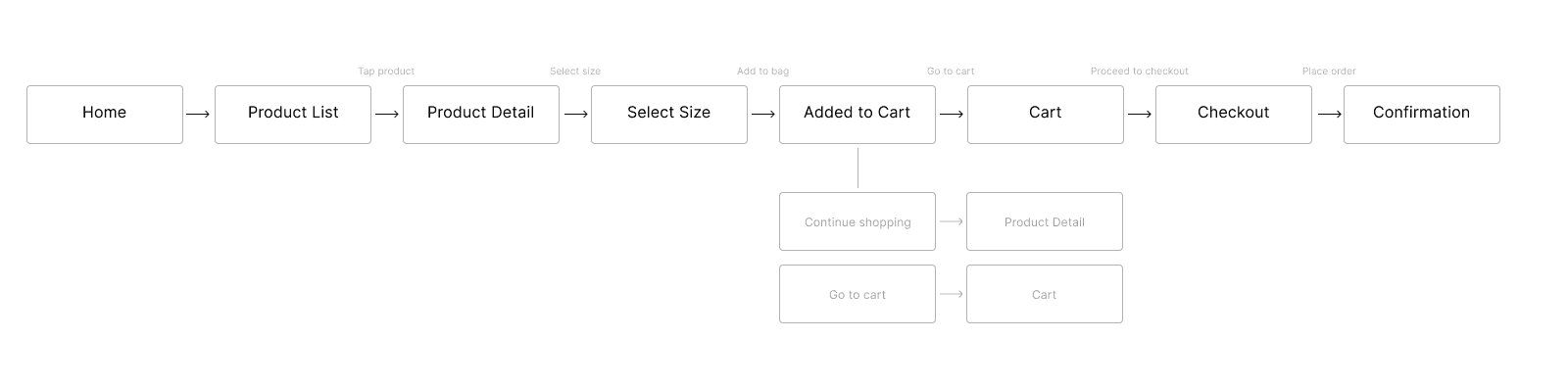
The product was approached as a linear purchase flow, where each step supports a specific decision:
Browsing products
Understanding product details
Selecting options
Reviewing the cart
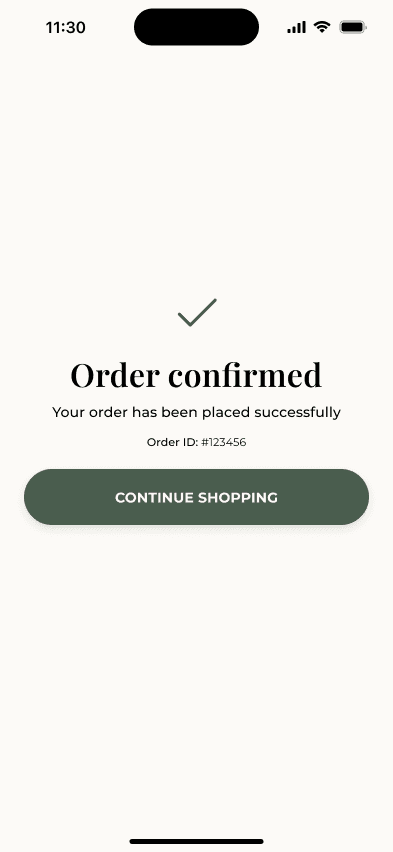
Completing the purchase
The goal was to reduce cognitive load by simplifying each step and maintaining consistency across the flow.
Core screens of the purchase flow

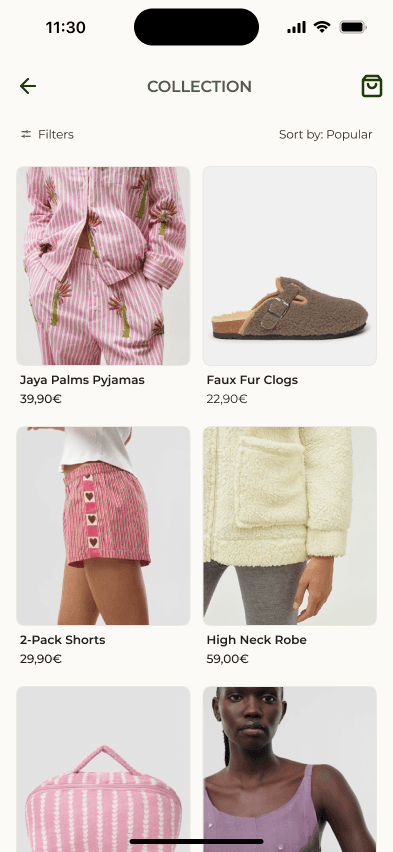
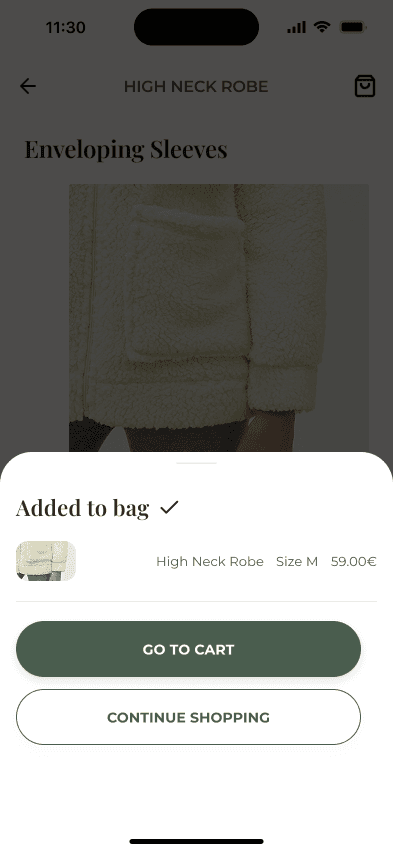
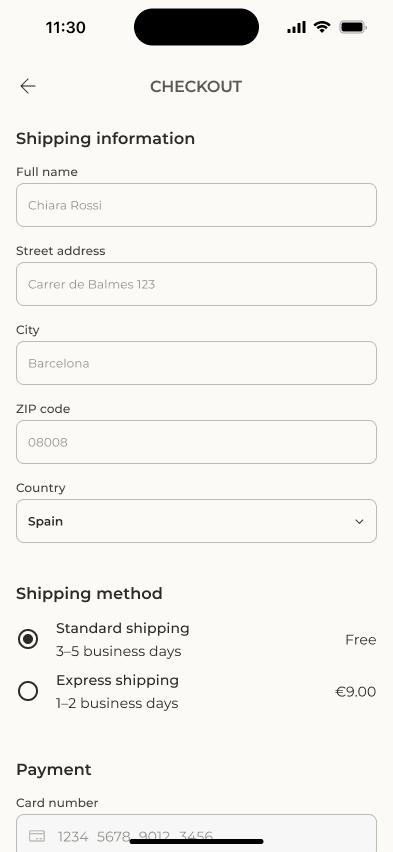
The flow was designed as a straightforward sequence from product discovery to checkout, minimizing unnecessary steps and keeping users oriented throughout the process.
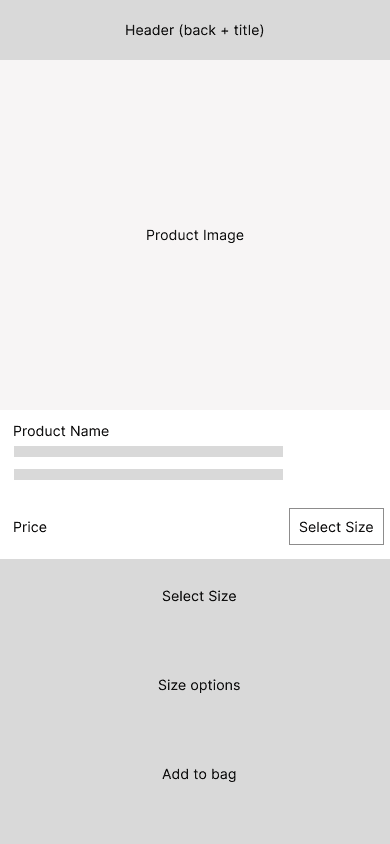
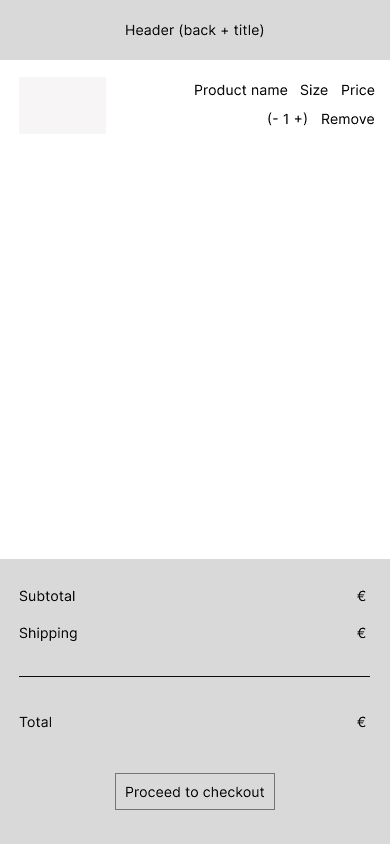
Early wireframes were used to define layout, hierarchy and content structure before moving to final UI.
The focus was on clarity of information and positioning of primary actions.
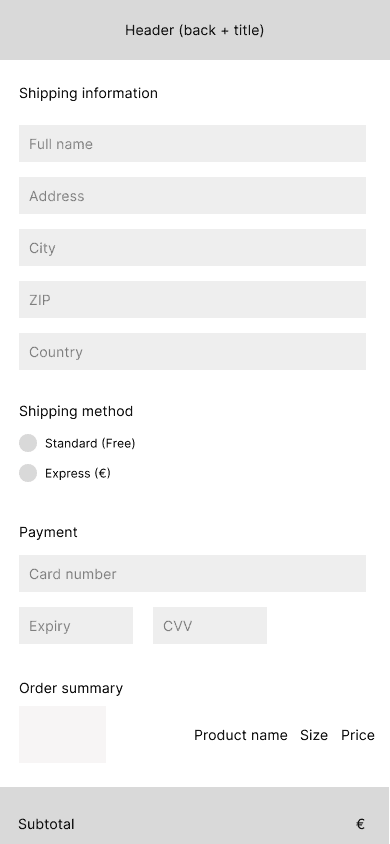
A simple prototype was created to validate the flow and interaction between steps.
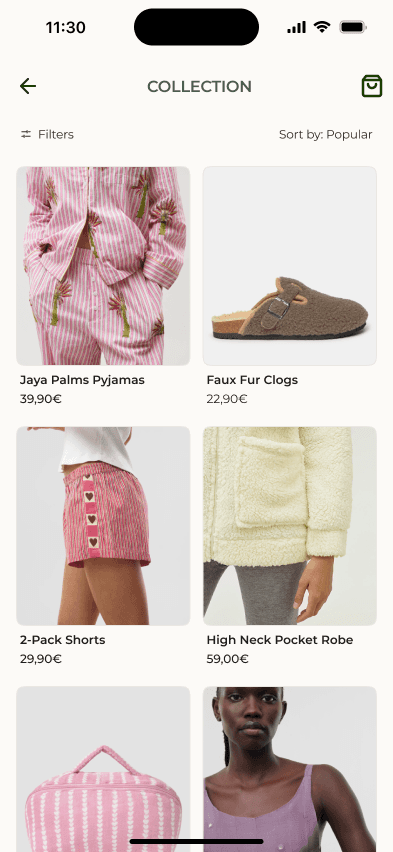
The product list is designed to support quick scanning and comparison.
Products are displayed in a simple grid, prioritizing image, name and price. A minimal structure reduces visual noise and helps users move quickly to product selection.
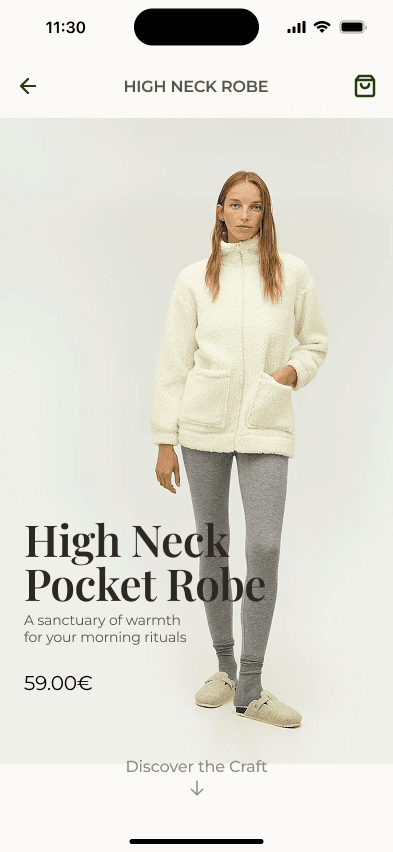
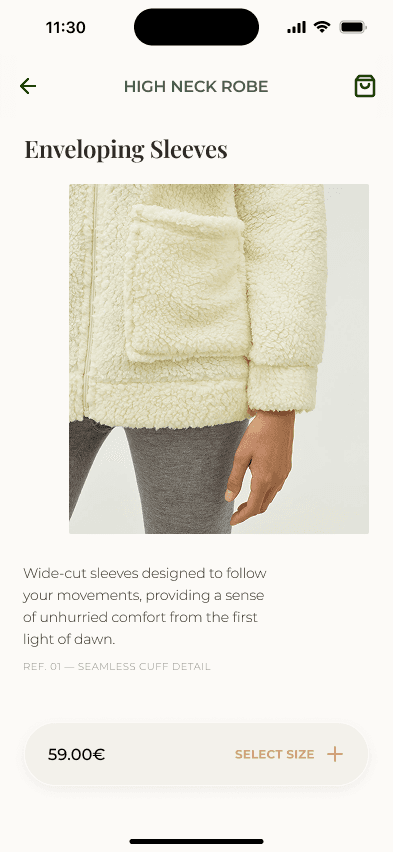
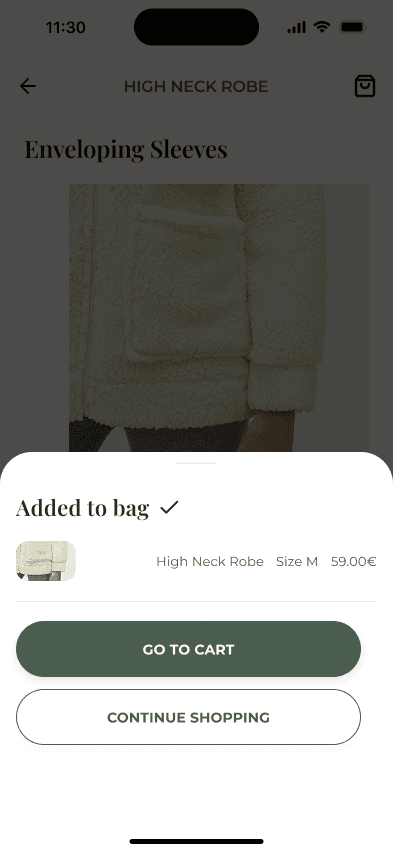
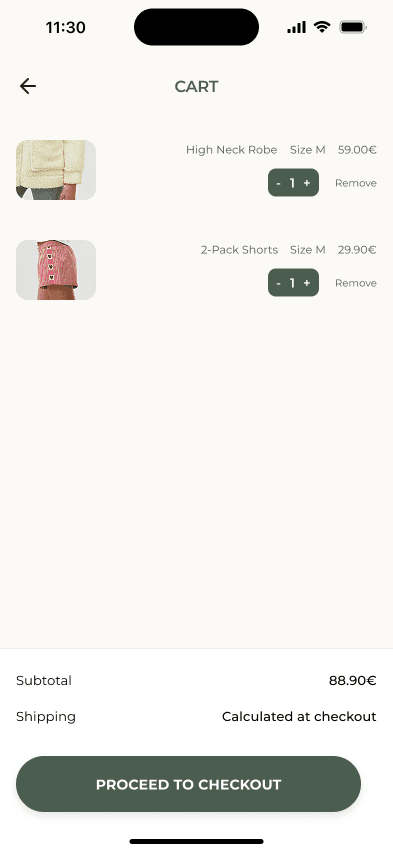
The cart provides a clear overview of selected items, quantities and total cost.
The layout emphasizes transparency, allowing users to review their choices before proceeding to checkout.
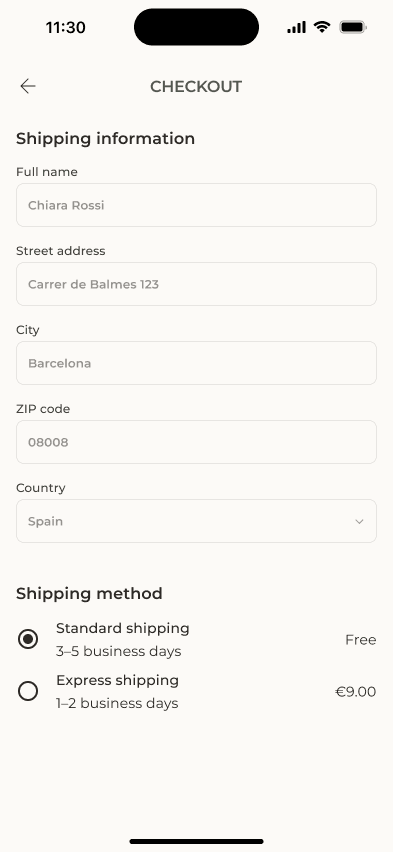
The checkout is simplified into a single step to reduce friction.
Only essential information is required, helping users complete the purchase quickly without unnecessary interruptions.
Reduced the checkout to a single step to minimize friction
Prioritized primary actions (Add to cart, Checkout) for clarity
Structured product information to support quick understanding
Maintained consistent layout patterns across all screens
Limited visual complexity to reduce cognitive load
The result is a simple and coherent purchase flow that follows familiar e-commerce patterns while improving clarity and usability.
The project demonstrates the ability to design complete user flows, structure information effectively and deliver functional interfaces aligned with real product scenarios.